
When it comes to choosing the right flooring for homes or businesses in College Station, Texas, the local climate plays a significant role in the decision-making process. With hot, humid summers and mild, occasionally wet winters, the flooring material must withstand temperature fluctuations, moisture, and wear. Two popular options are epoxy coatings and traditional concrete floors. But which one performs best under College Station’s unique weather conditions? Let’s dive into the comparison.
Understanding Epoxy Flooring
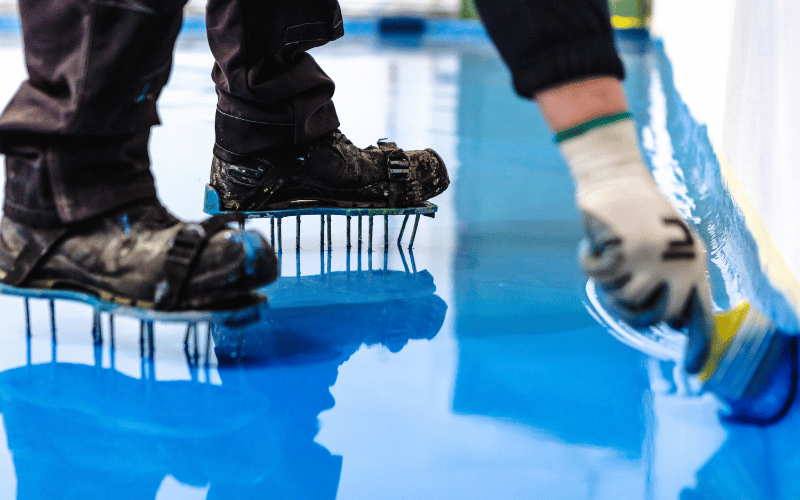
Epoxy flooring is a durable, resin-based coating applied over concrete surfaces. It creates a seamless, glossy finish that is highly resistant to moisture, stains, and chemicals. In College Station’s humid climate, where summer humidity often exceeds 70%, epoxy’s moisture resistance is a major advantage. It prevents water damage and mold growth, making it ideal for garages, warehouses, and even indoor spaces. Additionally, epoxy can handle the heat, as it doesn’t crack or warp under high temperatures. However, prolonged exposure to direct sunlight may cause yellowing or fading over time, so it’s best used in shaded or indoor areas.
Evaluating Concrete Flooring
Concrete, on the other hand, is a classic choice known for its strength and affordability. It’s naturally resilient to temperature changes, which suits College Station’s hot summers and cooler winters. Unsealed concrete, however, is porous and can absorb moisture, leading to cracks or staining during rainy periods or high humidity. To combat this, many opt for sealed concrete, which adds a protective layer to resist water and wear. While concrete is low-maintenance, it lacks the aesthetic appeal and chemical resistance of epoxy, and it can feel cold or hard underfoot in winter months.
In conclusion, both epoxy and concrete have their strengths in College Station’s climate, but the choice depends on specific needs. Epoxy excels in moisture-heavy environments and offers a polished look, though it may require UV protection outdoors. Concrete is a budget-friendly, durable option that performs well with proper sealing. For indoor spaces or areas prone to spills, epoxy might edge out as the better performer. For outdoor patios or heavy-traffic zones, sealed concrete could be the practical pick. Consider your space, budget, and maintenance preferences before deciding.